Understanding Refractive Errors and Surgical Options
Refractive errors are among the most common vision problems worldwide, and surgical options like LASIK, SMILE, and PRK offer effective solutions for many patients.
👁️ What Are Refractive Errors?
Refractive errors occur when the eye cannot properly focus light on the retina, leading to blurred vision. The main types include:
- Myopia (nearsightedness): Difficulty seeing distant objects clearly.
- Hyperopia (farsightedness): Difficulty focusing on close objects.
- Astigmatism: Distorted or blurred vision due to irregular corneal curvature.
- Presbyopia: Age-related loss of near vision, typically after age 40.
Glasses and contact lenses are the most common treatments, but many people seek surgical options to reduce dependence on corrective lenses.
🔬 Surgical Options for Refractive Errors
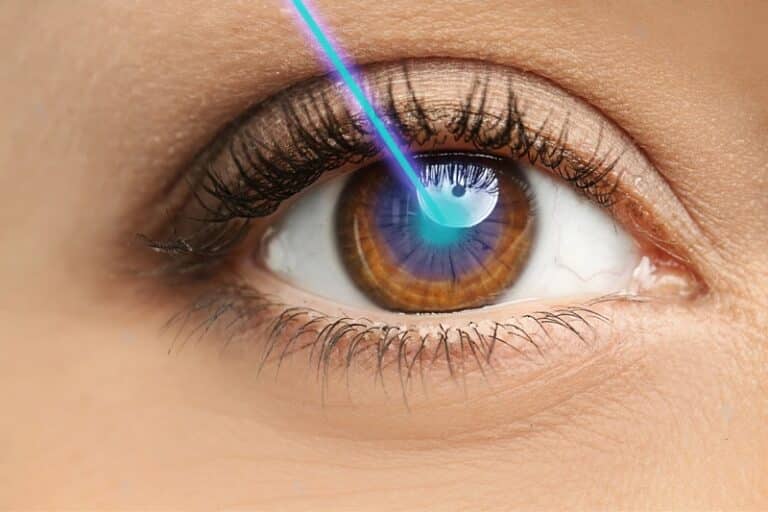
Modern refractive surgeries reshape the cornea or replace the eye’s natural lens to improve focus. Here are the most common procedures:
| Surgery Type | How It Works | Best For | Recovery |
| LASIK (Laser-Assisted In Situ Keratomileusis) | Creates a corneal flap, reshapes the cornea with a laser | Myopia, hyperopia, astigmatism | Quick recovery, vision improves in days |
| SMILE (Small Incision Lenticule Extraction) | Removes a small disc of corneal tissue via a tiny incision | Moderate to high myopia, astigmatism, dry eyes | Minimally invasive, fast healing |
| PRK (Photorefractive Keratectomy) | Removes the corneal surface layer, reshapes tissue underneath | Thin corneas, dry eyes | Longer recovery, but effective |
⚖️ Benefits and Risks
- Benefits: Reduced dependence on glasses/contacts, improved quality of life, quick results for most procedures.
- Risks: Dry eyes, glare/halos, infection, or rare vision loss. Not all patients are candidates—eye health and stability of prescription are critical factors.
📝 Conclusion
Refractive errors affect millions, but surgical options like LASIK, SMILE, and PRK provide effective long-term solutions. Choosing the right procedure depends on your eye health, lifestyle, and vision goals. Always consult with an ophthalmologist to determine the safest and most effective treatment for your needs.